

Bone Broth vs Collagen Powder: What's Actually the Difference?
Published at: September 30, 2026
Published at: September 30, 2026

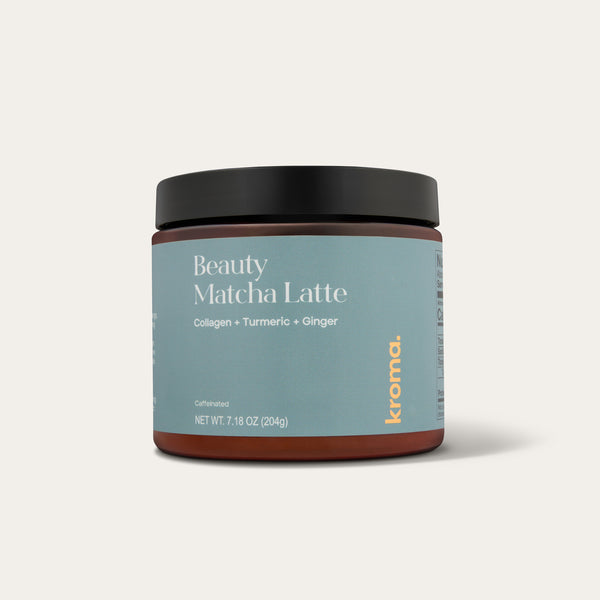

Beauty Matcha Latte ~ 24 Servings
Quick answer: No, bone broth and collagen powder aren't the same. Bone broth is a whole-food liquid that contains collagen (mostly as gelatin and peptides) plus minerals and other nutrients, but the amount varies by batch, roughly 2-12g per cup. Collagen powder is a concentrated, hydrolyzed extract that delivers a consistent 10-20g per scoop. Choose powder for a precise dose, broth for gut support and whole-food nutrition, or use both.
Both are everywhere. Both claim to support skin, joints, and gut health. And the question comes up constantly: is bone broth the same as collagen? Not quite, and the difference matters depending on what you're trying to accomplish.
Here's the bone broth vs collagen powder breakdown, side by side, so you can decide with real information instead of marketing copy.
Both start from the same place: animal bones, skin, and connective tissue, slowly broken down to release collagen. Where they diverge is what happens next.
Bone broth is simmered for 12-24 hours and left as a whole-food liquid. During that long simmer, collagen is extracted as gelatin and peptides, alongside minerals (calcium, magnesium, potassium) and, in variable amounts, glucosamine, chondroitin, and hyaluronic acid. Collagen powder takes collagen and processes it further: hydrolyzing it into smaller peptide fragments that are easier to absorb, then stripping away the surrounding nutrients to leave a concentrated, tasteless powder.
Neither is fake or inferior. They're different products from the same starting material. Bone broth is closer to food; collagen powder is closer to a supplement.
This is where the real difference shows up.
Bone broth: roughly 2-12 grams of collagen per cup, depending on the recipe, bones used, and simmer time. It varies batch to batch, even within the same brand.
Collagen powder: typically 10-20 grams of hydrolyzed collagen peptides per scoop, standardized and consistent every time.
Commonly studied doses run from a few grams up to about 15g daily. Matching 10g from broth can take anywhere from 1 to 5 cups, depending on the batch. One review found bone broth unlikely to reliably match supplemental collagen doses, which is why we treat powder as the precise option and broth as the whole-food one. If the best collagen source for you means hitting a specific, measurable number every day, powder wins on convenience alone.
Most of the clinical research on skin elasticity, hydration, and wrinkle reduction has used hydrolyzed collagen peptides, not bone broth. That's largely a matter of study design: peptides are standardized and easy to dose consistently, which is exactly what researchers need. So if collagen vs bone broth for skin research is your deciding factor, powder currently has the stronger paper trail.
That doesn't mean bone broth does nothing for skin. The pathway is different. The glycine, proline, and other compounds in bone broth may support the gut lining, which is covered in depth in our piece on bone broth and gut health, and a healthier gut barrier is increasingly linked to skin outcomes through the gut-skin axis. That research is still emerging and hasn't been established for bone broth specifically. It's a slower, more indirect route, but not a nonexistent one.
There's no reason you can't use both. They deliver different nutrients, and there's no biological reason to choose only one.
Kroma tip: 24K Chicken Bone Broth or 24K Beef Bone Broth gives you the whole-food format — minerals, gut support, and collagen together — while our Beauty Matcha Latte adds a more concentrated collagen boost alongside matcha and turmeric. Rotating both covers the full range rather than betting on just one.
When you weigh bone broth vs. collagen powder, it comes down to what you want from your day:
The bone broth vs collagen debate isn't really about which one is better. It's about which nutrient profile matches what you're trying to do. Collagen powder gives you a precise, concentrated dose. Bone broth gives you collagen, mostly as gelatin and peptides, wrapped in a whole food with gut- and mineral-supporting extras.
Most people don't need to choose permanently. Many of the best routines rotate both: bone broth for meals and gut support, collagen powder for the mornings when a measured scoop is faster than a mug.
Cover both bases with Kroma. Explore our 24K Bone Broths and Beauty Matcha Latte, whole-food and collagen support from both angles.
References:
Bone Broth vs. Collagen: What's the Difference? — Ancient Nutrition
Bone Broth Unlikely to Provide Reliable Concentrations of Collagen Precursors Compared With Supplemental Sources of Collagen — PubMed
The Sustained Effects of Bioactive Collagen Peptides on Skin Health: A Randomized, Double-Blind, Placebo-Controlled Clinical Study — NCBI/PMC
The effects and mechanisms of collagen peptides for alleviating skin ageing (2023 meta-analysis, 26 RCTs, 1,721 participants) — Springer Nature
Last Edited: September 30, 2026
Beauty Matcha Latte ~ 24 Servings