You go to bed at a reasonable hour. You’re not skipping meals. You’ve cut back on the late nights and the scrolling. And yet you wake up exhausted, crawl through the morning on caffeine, crash somewhere around 2 PM, and repeat it all over again the next day.
Sound familiar?
If it does, your low energy levels may be trying to tell you something. And here’s the thing: you can’t out-coffee, out-nap, or out-willpower a genuine energy problem. You have to address it at the source.
Here’s what you need to know.
What Energy Actually Is — and Why Yours Is Disappearing
Energy isn’t just about how many hours you slept. True, sustained energy is the product of several interconnected systems working together: your mitochondria converting nutrients into cellular fuel, your adrenal glands managing your stress response, your blood sugar staying stable between meals, and your hormones communicating clearly with every cell in your body.
When people ask why am I always tired, the answer is almost never a single cause. It’s usually a convergence — chronically disrupted sleep, blood sugar swings, elevated cortisol, nutritional gaps, and a nervous system that never fully recovers from one stressor before the next one arrives.
The result is a body that’s running on empty and borrowing against its own reserves — and caffeine that stops working the way it used to. Understanding how to increase energy naturally means understanding which of these systems needs support, and giving it what it actually needs to recover.
Common Signs Your Energy Problem Goes Deeper Than Sleep

Low energy is often dismissed as a personality trait or the inevitable cost of a busy life. But these are signals worth paying attention to:
-
Morning fatigue that doesn’t lift. If you wake up feeling unrefreshed even after a full night of sleep, this is a classic sign that something beyond sleep quantity is at play — often cortisol dysregulation or blood sugar instability disrupting sleep quality from the inside.
-
The 2–3 PM crash. A reliable afternoon energy slump is one of the most consistent signs of blood sugar imbalance. When blood sugar drops after lunch, energy and focus go with it — and the craving for caffeine or sugar kicks in hard.
-
Wired but tired. Feeling exhausted but unable to switch off — lying awake at night despite being depleted all day — is a hallmark of elevated cortisol and one of the most commonly missed adrenal fatigue symptoms.
-
Reliance on caffeine just to feel functional. When you need caffeine not for a boost but simply to reach baseline, it’s a signal that your body’s natural energy systems are struggling. Caffeine masks low energy without addressing why it exists.
-
Mood swings and irritability. Energy and emotional regulation share the same physiological infrastructure. When cortisol and energy are out of balance, so is your ability to handle stress, frustration, and uncertainty without feeling overwhelmed.
-
Brain fog and poor focus. The brain is the body’s most metabolically demanding organ. When energy production is compromised — through blood sugar swings, nutritional deficiencies, or adrenal dysfunction — cognitive performance suffers visibly.
-
Getting sick frequently. Chronic low energy and adrenal fatigue symptoms often come packaged with a suppressed immune system. When the body is in prolonged stress mode, resources are diverted away from immunity and repair.
-
Cravings for sugar and caffeine. Intense cravings for quick-energy foods are rarely a willpower problem. They’re a signal that blood sugar is unstable and your body is urgently seeking fast fuel — a cycle that perpetuates low energy rather than solving it.
The Big Players: What’s Actually Draining Your Energy
While energy is the product of many systems, a handful of key drivers are at the root of most chronic fatigue.
Cortisol and Energy
Cortisol, your primary stress hormone, is meant to rise in the morning and gradually decline through the day — giving you energy when you need it and winding down for sleep. But in today’s chronically stressed world, that rhythm gets disrupted. The link between cortisol and energy is direct: when cortisol is elevated too long or crashes too early, the result is the exhausted-but-wired feeling, poor sleep, and that bone-level fatigue that no amount of rest seems to fix.
Blood Sugar Balance and Energy
Every time blood sugar spikes and crashes, your energy goes with it. Blood sugar balance and energy are inseparable. A high-carb breakfast, a skipped meal, or a mid-afternoon sugar hit all trigger the same cycle: a brief lift followed by a sharp drop that leaves you reaching for caffeine or more sugar. Over time, this pattern drives insulin resistance, further destabilizing energy regulation.
Adrenal Fatigue
The adrenal glands produce cortisol, adrenaline, and other hormones that govern your stress response and energy levels. When they’re chronically overworked — from unrelenting stress, poor sleep, over-exercising, or under-eating — output starts to decline. Adrenal fatigue symptoms include persistent tiredness, difficulty handling stress, salt cravings, low blood pressure, and the inability to feel rested no matter how much sleep you get.
Mitochondrial Function
Mitochondria are the energy-producing engines inside every cell. They require a consistent supply of micronutrients — B vitamins, magnesium, CoQ10, iron — to function properly. When these are depleted through chronic stress, poor diet, or high caffeine intake (which depletes key minerals over time), cellular energy production declines. This is why low energy often persists even when lifestyle looks reasonable on paper.
Thyroid Function
The thyroid is your metabolic engine. When thyroid output is low, everything slows — metabolism, digestion, mood, cognitive function, and energy. Thyroid dysfunction is significantly underdiagnosed, particularly in women, and is one of the most common root causes of chronic fatigue that gets mistaken for burnout or depression.
What Disrupts Energy Balance?

Understanding what’s driving your low energy is the first step toward fixing it.
Chronic stress is the single biggest drain on sustainable energy. Elevated cortisol suppresses sleep quality, disrupts blood sugar balance, depletes key nutrients, and keeps the nervous system locked in a state of activation that makes genuine recovery impossible.
Blood sugar instability from diets high in refined carbohydrates, sugar, and ultra-processed foods creates an energy rollercoaster that leaves you exhausted by mid-afternoon. Without blood sugar balance, energy without caffeine feels genuinely impossible.
Poor sleep quality (not just quantity) is both a consequence and a cause of the energy crisis. Without deep, restorative sleep, growth hormone isn’t released, cortisol patterns are disrupted, and the cellular repair that should happen overnight doesn’t.
Nutrient deficiencies — particularly magnesium, B vitamins, iron, and vitamin D — directly impair the energy-production pathways your mitochondria depend on. These depletions are common, often undetected, and profoundly impactful on how you feel day to day.
Over-exercising or under-recovering can chronically elevate cortisol, suppress hormonal output, and push the body further into an energy deficit — particularly when paired with under-eating or inadequate protein intake.
How to Increase Energy Naturally
The good news: lifestyle and nutrition are among the most powerful tools available for restoring real, lasting energy. Here’s where to start.
Stabilize Blood Sugar First
Blood sugar balance and energy are so tightly linked that stabilizing glucose is the single most impactful first step for most people. When blood sugar is stable, energy stays consistent, cravings diminish, and the cortisol spikes triggered by glucose crashes stop disrupting everything downstream.
To stabilize blood sugar:
- Eat protein at every meal and snack
- Reduce or eliminate refined sugar and processed carbohydrates
- Never eat carbohydrates alone — always pair them with protein and fat
- Avoid skipping meals, which triggers a cortisol stress response
Kroma tip: Starting your day with a high-protein, low-sugar breakfast is the most effective natural energy boost you can give yourself. Super Porridge or a smoothie made with Plant-Based Protein stabilizes blood sugar from the first meal and sets a foundation for consistent energy throughout the day.
Use Adaptogens Strategically
Adaptogens are a class of herbs and mushrooms that help the body adapt to stress by modulating cortisol and supporting adrenal function. They are among the most evidence-supported tools for addressing adrenal fatigue symptoms and restoring the cortisol-and-energy rhythm that chronic stress disrupts. The most well-researched adaptogens for energy include ashwagandha, rhodiola, maca, cordyceps, and reishi.
Adaptogens aren’t stimulants — they don’t force energy the way caffeine does. Instead, they help the body regulate itself more effectively, which is exactly what’s needed when the goal is sustainable energy without caffeine.
Kroma tip: Several Kroma products are formulated with adaptogenic ingredients specifically chosen for Kroma energy support. The Beauty Matcha Latte and Plant-Based Proteins include functional adaptogens for energy regulation and stress resilience — giving you a lift that works with your biology, not against it.
Prioritize Magnesium
Magnesium is required for over 300 enzymatic reactions in the body, including the production of ATP — the molecule your cells use for energy. It also plays a direct role in reducing cortisol, supporting sleep quality, and calming the nervous system’s stress response. Most people are chronically deficient, and that deficiency has a measurable effect on how to increase energy naturally.
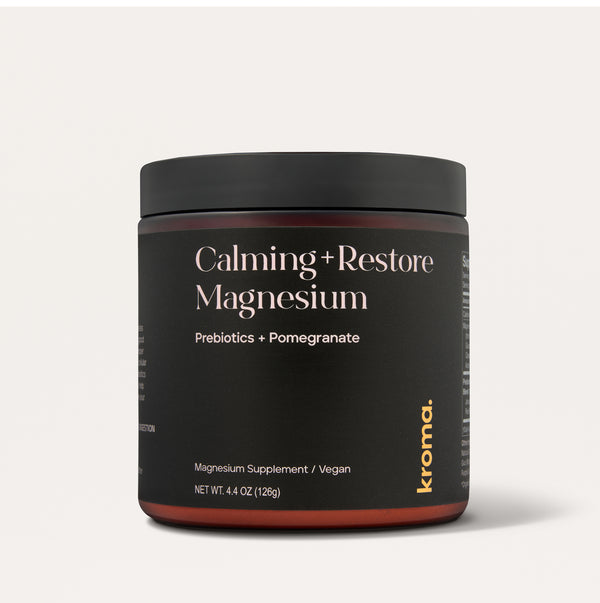
Kroma tip: Calming + Restore Magnesium taken nightly supports deep, restorative sleep, cortisol regulation, and the nervous system’s ability to move out of chronic stress mode — addressing one of the most overlooked root causes of low energy.
Support Your Gut
The gut and energy are more connected than most people realize. A compromised gut microbiome impairs nutrient absorption — including the B vitamins and minerals that fuel mitochondrial energy production. Gut dysbiosis also drives systemic inflammation, which is one of the most energy-depleting forces in the body.
Kroma tip: Super Core — Kroma’s dairy-free colostrum — supports gut lining integrity, reduces inflammation, and improves the absorptive capacity your body needs to actually convert the nutrients you eat into real, cellular energy.
Move Intentionally — Not Excessively
Regular, appropriately-dosed movement is a powerful natural energy boost — but only when it’s matched with adequate recovery. Strength training improves mitochondrial density and insulin sensitivity. Walking regulates cortisol and blood sugar. Yoga and breathwork activate the parasympathetic nervous system, which is where genuine recovery happens. Excessive high-intensity training without recovery does the opposite, driving adrenal fatigue symptoms deeper.
A Note on Testing
If you’ve tried the foundational lifestyle changes and still find yourself asking why am I always tired, it may be time to dig deeper. Working with a functional medicine practitioner to test cortisol patterns (through a four-point salivary cortisol panel), thyroid function, iron and ferritin levels, vitamin D, and B12 can provide invaluable clarity.
Guessing based on symptoms alone has limits. Testing removes the guesswork and allows for targeted, personalized Kroma energy support that addresses your specific root causes rather than applying generic solutions.
Your Energy Responds to How You Live

Chronic low energy isn’t a personality type. It’s not inevitable, and it’s not something you’re supposed to manage forever with more caffeine. It’s a signal — from your adrenals, your blood sugar, your mitochondria, your nervous system — that something needs support.
The body wants to produce energy. It is always trying to regulate itself. Your job is simply to stop putting up barriers and start giving it what it actually needs.
Stable blood sugar. Adaptogenic support. Restorative sleep. Nutrient repletion. Stress recovery. These aren’t complicated interventions — but they are the foundation that natural energy is built on. And they work far better, and far longer, than anything that comes in a can.
Start there. Stay consistent. Your energy will follow.
Support your energy from the inside out with Kroma. Shop our Energy Collection and discover daily essentials designed to restore real, lasting energy without the crash.
Last Edited: May 08, 2026