

Why You're Probably Not Getting Enough Fiber (And What Actually Fixes It)
Published at: September 17, 2026
Published at: September 17, 2026


Super Porridge / Multi-Serving
Quick Answer: Most adults need 25 grams of fiber per day for women and 38 grams for men (21g and 30g after age 50), or roughly 14 grams per 1,000 calories eaten. Most Americans only get about 15 grams a day — roughly half the target.
Protein had its moment. Fiber is having its now — and unlike a lot of nutrition trends, this one is backed by an uncomfortable statistic: only about 5% of American adults actually hit their daily fiber target.
You can be eating what feels like a genuinely healthy diet — salads, fruit, the occasional whole-grain bread — and still fall dramatically short. Here's how much fiber per day you actually need, what happens when you don't get it, and what actually closes the gap.
The standard target is 25 grams per day for women and 38 grams for men (dropping slightly to 21g and 30g after age 50). A more precise formula: 14 grams of fiber for every 1,000 calories you eat. At a typical 2,000-calorie intake, that's 28 grams a day.
The average American eats about 15 grams — roughly half the recommendation. The 2020–2025 Dietary Guidelines for Americans list fiber as a "nutrient of public health concern" — meaning the shortfall is common enough to move population-level disease rates, not just an individual inconvenience.

Most fiber deficiency symptoms are subtle enough to blame on something else. A few worth connecting back to fiber:
Irregular digestion. Constipation is the most direct sign — fiber adds bulk and draws water into stool, and without it, things slow down.
Blood sugar swings and crashes. Fiber slows glucose absorption. Without it, meals that look balanced on paper can still spike and crash blood sugar.
Feeling hungry soon after eating. Fiber is one of the most satiating components of food. Low-fiber meals tend to leave you searching for a snack within the hour.
Rising cholesterol. Soluble fiber binds cholesterol in the digestive tract. Chronically low intake is one of several factors that can nudge levels upward over time.
Whole foods should always come first — fiber supplements are a backup, not a substitute. A few of the highest-fiber foods worth building meals around:
Lentils and split peas: ~8g per half cup, cooked
Raspberries: 8g per cup
Chia seeds: ~10g per ounce
Artichokes: ~7g per medium artichoke
Pears (with skin): ~5.5g per medium pear
Brussels sprouts: ~4g per cup, cooked
Oats: ~4g per half cup, dry
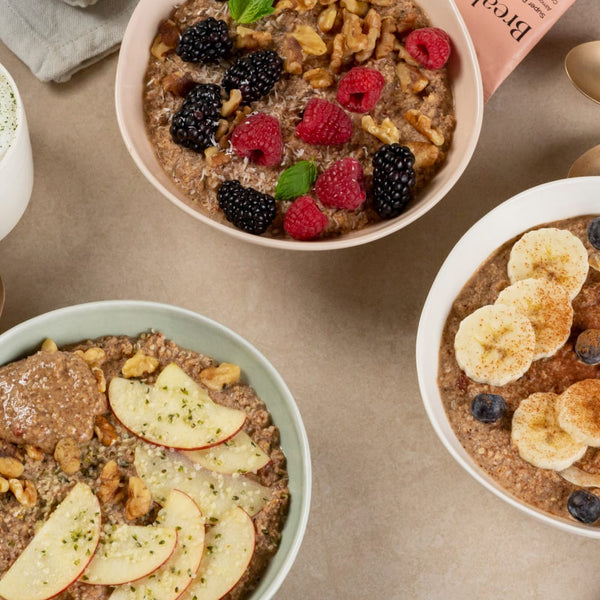
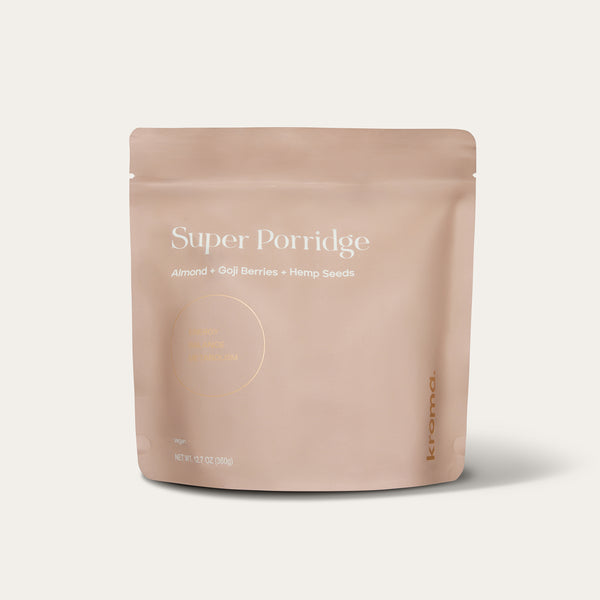
Kroma tip: Super Porridge delivers 5g of fiber (18% daily value) in one bowl, built from whole nuts, seeds, and chocho protein rather than an isolated fiber additive.
The fiber for gut health connection goes well past regularity. Fiber — specifically the fermentable kind found in foods like oats, legumes, and vegetables — feeds the bacteria that make up your gut microbiome. Those bacteria, in turn, produce short-chain fatty acids linked to lower inflammation, better immune regulation, and even mood support through the gut-brain axis.
This is the same territory we covered in bone broth and gut health — fiber and collagen support the gut from different angles, and most complete gut-health strategies benefit from both.

If food alone isn't closing the gap, a best fiber supplement search usually turns up two main types: psyllium husk (soluble, well-studied, gentle) and inulin or chicory root (prebiotic, but can cause more gas and bloating in sensitive people).
A few practical notes regardless of which you choose: start with half the suggested dose and increase gradually — a sudden fiber increase, from food or supplement, commonly causes bloating and discomfort. Drink extra water alongside any fiber supplement, since fiber needs water to do its job. And treat supplements as a bridge, not a replacement — whole foods bring fiber alongside vitamins, minerals, and phytonutrients that isolated fiber powders don't.
Fiber doesn't get the attention protein does, but the gap between what you're eating and what you need is often larger. How much fiber per day you need isn't complicated — 25 to 38 grams, depending on sex and calorie intake — but closing that gap takes deliberate attention, since most default eating patterns land well short.
Start with food. Add slowly. Drink water. The payoff — steadier blood sugar, better digestion, a healthier gut microbiome — compounds quietly over months, much like protein did once people started paying attention to it.
Close the fiber gap with Kroma. Explore Super Porridge and our 24K Bone Broths — built for gut health from more than one angle.
References:
Only 5% of American adults meet fiber recommendations — Stanford Report 2026
Most Americans are not getting enough fiber in our diets — American Society for Nutrition
Most Americans fall short on fiber, and the food industry sees an opening — KHQ National
Increasing Fiber Intake — UCSF Health Patient Education
Last Edited: September 17, 2026
Super Porridge / Multi-Serving