Quick answer: If breakfast is mostly coffee, toast, fruit, or a small bowl of cereal, you may be starting the day with very little protein. A protein-rich breakfast can make it easier to meet your daily protein needs and support muscle maintenance, fullness, and overall nutrition. For many adults, getting roughly 25 to 30 grams of protein at a meal is a practical target, although individual needs vary based on body size, age, activity level, and health status.
Think about what actually made it onto your plate this morning.
Coffee has virtually no protein. Avocado toast may provide only a few grams. A small yogurt may contain more, but the total can still fall well below what you need from a meal. Even two eggs provide only around 12 grams of protein.
None of these foods are "bad" breakfast choices. The problem is that they may not provide enough protein on their own.
And that matters because protein is one of the nutrients your body needs every day to maintain muscle, support recovery, and keep you feeling satisfied between meals.
The Protein Gap Can Start at Breakfast

Protein needs change throughout life. As we get older, maintaining muscle becomes increasingly important, particularly when combined with regular resistance training and adequate overall nutrition.
Research in older adults generally supports protein intakes above the standard minimum recommendation of 0.8 grams per kilogram of body weight per day, with many experts recommending around 1.0 to 1.2 grams per kilogram for healthy older adults and higher amounts in certain situations. Individual needs can vary considerably.
The bigger issue is not necessarily that breakfast must contain a specific number of grams. It is that breakfast is often the lowest-protein meal of the day.
That can make it much harder to reach your overall protein target by dinner.
A practical approach is to include a meaningful source of protein at breakfast, then continue distributing protein across lunch, dinner, and snacks rather than trying to make up the entire amount at night.
What Happens When You Add More Protein to Breakfast?
Adding protein to breakfast is not a magic fix for every energy or metabolism problem. But it can be a simple nutritional upgrade that supports several important aspects of health.

1. It Helps You Build a More Balanced Breakfast
A breakfast built around carbohydrates alone can be relatively low in protein. Adding a protein source creates a more balanced meal.
For example, instead of having toast and coffee alone, you might add eggs, Greek yogurt, cottage cheese, tofu, a protein smoothie, or a protein-rich drink.
Research has found that adding protein to carbohydrate-containing meals can influence post-meal glucose and insulin responses, although the effect depends on the type and amount of food consumed. Choosing a breakfast with a lower glycemic load can also help reduce the rise in blood glucose after eating.
The takeaway is simple: you do not need to eliminate carbohydrates. Pairing them with protein, fiber, and other nutrient-dense foods can create a more satisfying meal.
2. It Supports Muscle Maintenance
This is one of the most important reasons to pay attention to protein as you get older.
Muscle tissue is constantly being broken down and rebuilt. Dietary protein provides amino acids that the body uses to support muscle protein synthesis.
Research suggests that distributing adequate protein across meals may be a useful strategy for supporting muscle health, particularly in older adults. A commonly discussed target is around 0.4 grams of protein per kilogram of body weight per meal, although individual needs vary.
That makes breakfast an important opportunity.
If your breakfast contains only 5 to 10 grams of protein and dinner contains most of your day's protein, you may be making the rest of the day unnecessarily difficult.
3. It Can Help You Stay Fuller Between Meals
Protein is well known for its role in satiety.
A breakfast that combines protein with fiber and minimally processed carbohydrates may keep you satisfied for longer than a meal that is primarily refined carbohydrates.
That does not mean protein prevents every afternoon craving. Hunger is influenced by sleep, activity, stress, total calorie intake, meal size, hormones, and many other factors.
But starting the day with an adequate amount of protein gives your breakfast more staying power.
4. It Makes Reaching Your Daily Protein Goal Easier
This may be the most practical benefit of all.
Imagine you are aiming for 90 grams of protein across the day.If breakfast contains only 5 grams, you still need 85 grams from lunch, dinner, and snacks.If breakfast provides 25 grams, you have already covered a meaningful portion of your daily goal.
That is why protein distribution matters. Research has found that breakfast is often the lowest-protein meal among older adults, while higher-protein breakfasts and lunches are associated with higher total daily protein intake.
Instead of thinking, "How can I eat more protein today?" think:
"Where can I add protein to the meals I already eat?"
Breakfast is often the easiest place to start.
5. It Supports Healthy Aging
Protein is not only about building muscle.
Adequate protein intake is part of an overall nutritional pattern that supports muscle function, physical performance, recovery, and healthy aging.
For adults over 40, this becomes particularly relevant because preserving lean muscle mass becomes more important with age.
Protein works best as part of a bigger picture that includes resistance exercise, adequate calories, sleep, hydration, and a varied diet.
What About Skin, Hair, and Nails?
Protein provides amino acids that the body uses to build and repair tissues, including structural proteins found in skin, hair, and nails.
But it would be misleading to suggest that simply skipping protein at breakfast immediately reduces collagen production or causes hair and nail problems.
Hair loss, brittle nails, and changes in skin can have many causes, including nutritional deficiencies, hormonal changes, stress, illness, genetics, and other health conditions.
The better takeaway is this:
Consistently meeting your overall protein and nutrient needs gives your body the building blocks it needs for normal tissue maintenance.
Breakfast is one opportunity to contribute to that daily intake.
How Much Protein Should You Aim for at Breakfast?
There is no single breakfast protein number that works for everyone.
A practical target for many adults is around 25 to 30 grams of protein at a meal, particularly when muscle maintenance is a priority. Some research uses approximately 0.4 grams per kilogram of body weight per meal as a useful benchmark.
Your ideal intake may be different depending on your body size, age, activity level, dietary pattern, and health needs.
Rather than obsessing over a perfect number, start by asking:
Does my breakfast contain a meaningful source of protein?
If the answer is no, that is an easy place to improve.
How to Actually Hit Your Protein Target Before 9am
This is where Kroma comes in, built specifically to make hitting a real protein target at breakfast the easy, default choice instead of one more thing to plan around.
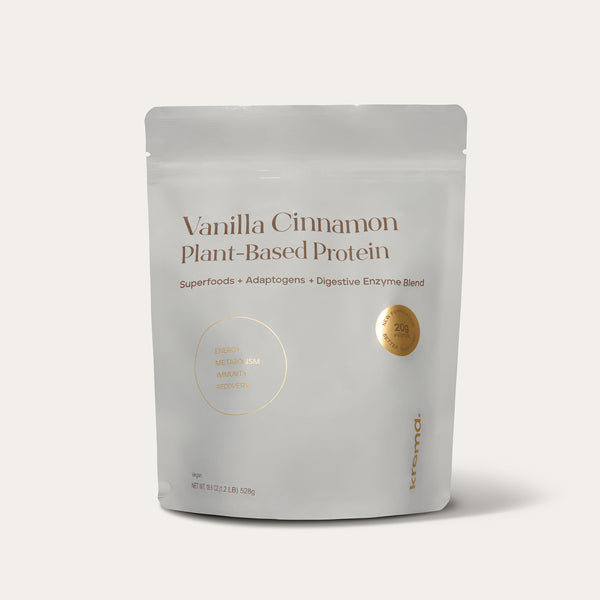
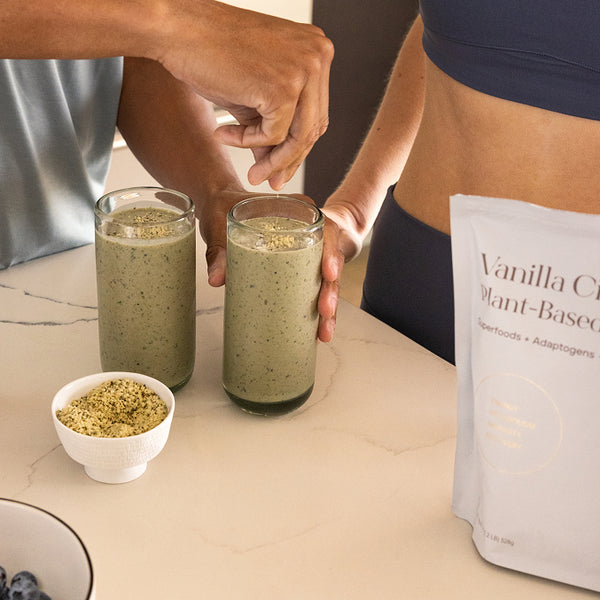
Kroma's Vanilla Cinnamon Plant-Based Protein: 20g of protein, ready in seconds. Just add water and go. No blender, no prep, no reason to skip it on your busiest mornings. At 20g per scoop, this alone gets you most of the way to the 25-35g breakfast target research points to for triggering muscle protein synthesis without a single dish to wash. Vanilla Cinnamon Plant-Based Protein is built for the mornings where a sit-down breakfast simply isn't happening: on the road, between school drop-off and a 9 am meeting, or straight out of a gym bag.
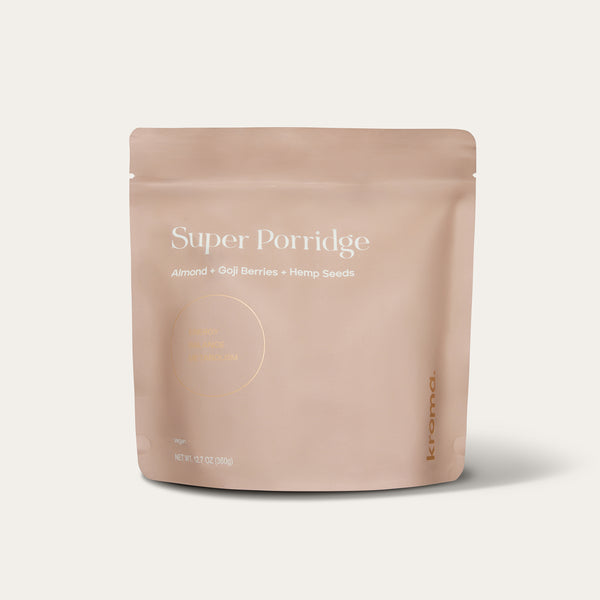
Kroma's Super Porridge: 8-12g of protein plus fiber to carry you to lunch. A warm, real-food breakfast that keeps you full and stable instead of reaching for a snack by 10 am. Where a bowl of plain oatmeal delivers maybe 5g of protein and a blood-sugar spike an hour later, Super Porridge is formulated to combine protein and fiber, the two nutrients most responsible for actual satiety. That combination is what keeps you out of the mid-morning vending machine.
Kroma's 24K Chicken Bone Broth: 12g of protein with gut-healing properties. Works any time of day, but especially powerful as a savory, protein-forward alternative to a carb-only breakfast. For anyone who genuinely doesn't want something sweet first thing in the morning, 24K Chicken Bone Broth fills the same role as a boiled egg or a slice of turkey — 12g of protein plus the collagen and amino acids (like glycine and proline) your gut lining and skin rely on to stay resilient.
Kroma's Beauty Matcha Latte: 12g of collagen protein in 2 scoops. Sustained energy without the crash, plus the skin, hair, and nail benefits that come from real collagen intake. Beauty Matcha Latte is designed to replace the coffee-on-an-empty-stomach habit specifically — pairing caffeine with actual protein instead of nothing, so you get the alertness without the cortisol spike that comes from drinking coffee alone first thing in the morning.
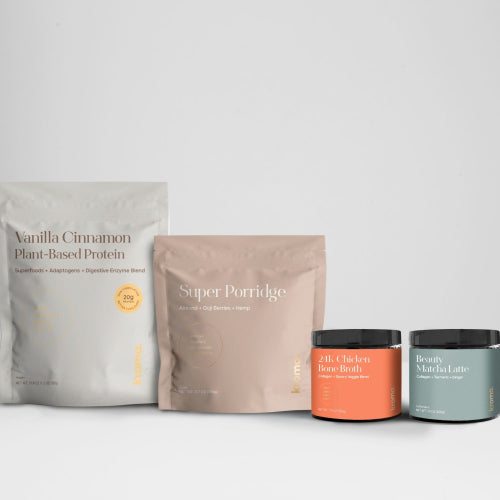
Together, these four make up the Kroma's High Protein Bundle — a set built around one simple idea: you shouldn't need a plan, a blender, or extra willpower to eat enough protein before 9 am. Mix and match based on what your morning actually looks like, and the gap closes itself.

The Bottom Line
The difference between a 5-gram breakfast and a 25-gram breakfast isn't just about hitting a number; it's the difference between fighting your blood sugar, cortisol, and energy all day versus starting from a stable foundation. You don't need a complicated morning routine to close the gap. You just need breakfast to actually contain enough protein to do its job — which is exactly what the Kroma's High Protein Bundle is there for, whenever you'd rather not start your day 20 grams short.
Because a better morning does not have to be complicated.
Sometimes, it starts with simply adding enough protein to your first meal.
Last Edited: August 10, 2026