Somewhere in your early 40s, the rules quietly changed.
The eating patterns that kept you lean in your 30s aren't holding the line. The workouts feel less effective. The weight is harder to lose, the muscle harder to keep, the energy harder to come by. You haven't done anything differently, but your body is doing something differently.
Most of the midlife conversation focuses on hormones, calories, or cardio. The variable hiding in plain sight is protein for women over 40 and most women are eating about half of what they actually need.
What Changes After 40
Three biological shifts raise your protein needs, usually before perimenopause symptoms even start.
Anabolic resistance. As estrogen fluctuates, your muscles become less responsive to dietary protein. The same amount that built muscle in your 30s now produces a weaker signal. This is the core reason protein and perimenopause deserve their own conversation.
Sarcopenia starts earlier than you think. Age-related muscle loss begins as early as your 30s and accelerates through your 40s. Women lose 3–8% of muscle per decade after 30, and the rate speeds up further after menopause. The muscle you protect now is the muscle you'll have in your 60s.
Bone density becomes a daily concern. Bone is protein-built; its collagen matrix is made of amino acids. Women lose bone density twice as fast as men after estrogen declines, and adequate protein is one of the strongest research-backed protections against that loss.
How Much Protein Do Women Actually Need?

The government RDA — 0.8 g/kg — is the minimum to prevent deficiency in a 20-year-old, not an optimal target for a woman in her 40s or 50s. So how much protein do women need through this phase?
Research consensus lands at 1.2–1.6 g of protein per kilogram of body weight per day — roughly double the RDA. A 2025 trial comparing 0.8 to 1.2 g/kg in older women found measurable improvements in muscle mass, grip strength, and waist circumference in just 12 weeks — at the higher intake, without changing exercise.
In real numbers:
• 140-lb woman: 76–102 g/day
• 160-lb woman: 87–117 g/day
• 180-lb woman: 98–131 g/day
Lean toward the higher end if you're training, losing weight, or in active perimenopause. And distribution matters as much as total: aim for 25–35 g of protein at every meal, three to four times a day, not all loaded at dinner.
How to Actually Hit Your Target
Start With a High-Protein Breakfast
A high protein breakfast for women over 40 is the highest-leverage habit you can build. It triggers morning muscle protein synthesis, stabilizes blood sugar, and quiets afternoon cravings. Aim for 25–35 g — not the 5–10 g a bowl of oatmeal delivers.
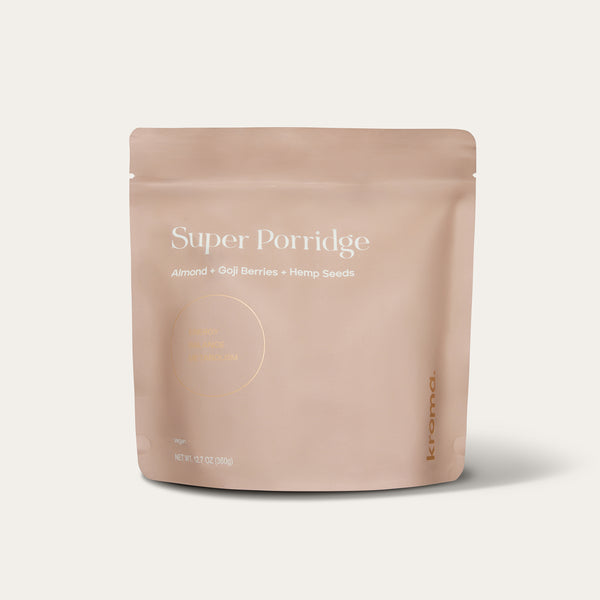
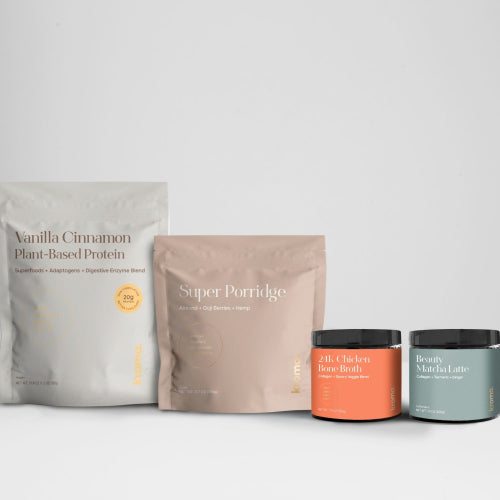
Kroma tip: Super Porridge delivers high-quality protein and functional nutrition in a format that works on real mornings.
Bridge Meals With Protein Snacks
Going six hours without protein leaves muscle protein synthesis quiet and blood sugar unstable. Bridge with bone broth, eggs, cottage cheese, or a protein shake.
Pair Protein With Resistance Training
Protein gives your body the building blocks. Resistance training tells your body to use them. Two to four sessions a week of bodyweight, dumbbells, or bands is enough. Without the training signal, even great protein intake produces diminishing returns through midlife.
Protein and Hormones: Beyond Muscle
The protein and hormones story goes deeper than muscle. Protein stabilizes blood sugar (which softens hot flashes and energy crashes), increases satiety hormones like PYY, and supplies amino acids for neurotransmitters that affect mood and sleep. Perimenopause nutrition without enough protein is like renovating a house without lumber — everything else you're doing works better when the foundation is in place.
The Bottom Line

More protein, distributed more evenly, paired with resistance training. Protein for women over 40 isn't about getting bulky — it's about staying strong, energetic, and metabolically resilient through a phase that asks more of your body than the one before.
Start with breakfast. Aim for a target. Spread it across the day. The difference shows up faster than you'd expect.
FAQ: Protein for Women Over 40
How much protein do women over 40 need per day?
Most research supports 1.2–1.6 g per kg of body weight per day — roughly double the standard RDA. For a 150-lb (68 kg) woman, that's about 82–109 g per day. Aim higher if you're training or in active perimenopause/menopause.
Why do women need more protein in menopause?
Declining estrogen causes anabolic resistance — your muscles become less responsive to protein. You need more per meal and better distribution through the day to get the same muscle-protein-synthesis effect you got in your 30s.
What's the best high-protein breakfast for women over 40?
Aim for 25–35 g in your first meal. Strong options: eggs with Greek yogurt or cottage cheese, a protein-rich porridge, or a smoothie with quality protein powder. Avoid the carb-only breakfast — toast, oatmeal alone, or a pastry — which spikes blood sugar without triggering meaningful muscle protein synthesis.
References:
Last Edited: July 08, 2026