Quick answer: In a culture that celebrates hustle, prioritizing sleep can feel countercultural, especially for women balancing careers, families, and personal goals. But sleep isn't optional recovery time. It's a biological necessity directly tied to hormone regulation, mood, focus, and long-term health. Because fluctuating estrogen and progesterone levels can make quality rest harder to come by at certain life stages, protecting sleep as a firm boundary, supported by nightly rituals like magnesium, is one of the most powerful acts of self-respect available.
In a culture that celebrates hustle, saying "goodnight" can feel radical, especially for women balancing careers, families, and personal goals. But sleep is not a luxury. It's a boundary, a form of dignity, and an act of self-respect.
Choosing to sleep each night is a declaration that your wellness matters. It's a quiet rebellion against the nonstop grind and a gentle but firm reminder that your time and health are valuable. Sleep isn't just about recovery. It's about honoring your life, your goals, and your power.
This Women's Month, we're reframing rest as a powerful statement that your body, mind, and energy are worthy of protection.
Why Women's Sleep Is Different

Women's sleep isn't simply a smaller version of men's sleep. It's genuinely its own biological experience. Hormonal cycles, stress, and daily responsibilities can all shape rest in ways that are unique to women. Research shows that fluctuations in estrogen and progesterone can directly affect sleep quality, making rest more elusive at certain times of the month or at certain life stages, from PMS to perimenopause.
This isn't a minor inconvenience. Chronic sleep deprivation affects far more than how tired you feel the next day. It can influence mood, focus, metabolism, and long-term health outcomes. That reality is exactly what makes prioritizing sleep so vital, not optional.
Setting a boundary around your bedtime is a form of empowerment. It tells yourself, and everyone around you, that your health is non-negotiable.
Magnesium as a Nightly Signal for Restoration
Magnesium is more than a mineral. It can become a gentle nightly cue that helps you transition into a state of relaxation. Magnesium plays important roles in nervous system function and muscle function, making it a natural addition to a calming evening routine.
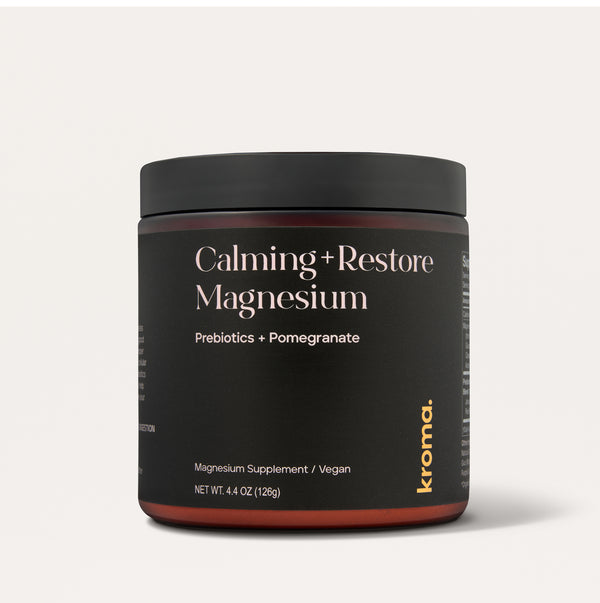
This is exactly the role Kroma’s Calming + Restore Magnesium is designed to play. Incorporating it into your evening routine can become more than simply taking a supplement. It can be a ritual that signals to your mind and body that it's time to slow down and prepare for rest.

Over time, a consistent evening ritual can help create a sense of calm and reinforce the message that tonight, restoration is permitted and that you are honoring yourself by allowing yourself to rest.
How to Make Sleep a Boundary

Creating sleep as a genuine, protected boundary takes intention. Here are a few ways to hold that line:
-
Set a consistent bedtime. Treat it like an important meeting with yourself. When sleep becomes non-negotiable, you send a clear message to your body that restoration is a priority.
-
Establish a nightly ritual. Dim the lights, take a magnesium supplement, journal, or run a warm bath. Small, repeated rituals can signal to your nervous system that it's time to unwind.
-
Step away from screens. Blue light and stimulating content from phones, tablets, and TVs can make it harder to wind down before bed. Disconnect at least 30 minutes before bedtime to create space for rest.
-
Say no to overcommitment. Respect your evenings. Decline late-night work or social obligations when you can. Boundaries around sleep are also boundaries around your time, energy, and well-being.
-
Create a calming environment. Soft lighting, a cool room temperature, and a quiet space can support your body's natural sleep rhythms. Kroma's Calming + Restore Magnesium fits naturally into this ritual, whether taken as a supplement or incorporated into a relaxing evening routine.
Sleep as Self-Respect
When we honor our sleep, we honor ourselves. Rest isn't only about physical recovery. It's also about emotional resilience, mental clarity, and having the energy to show up fully in your life.
Every night you prioritize rest, you reinforce a powerful message: your energy, your body, and your well-being are worthy of care.
Frequently Asked Questions About Women's Sleep and Magnesium
Why is sleep harder for women at certain times of the month?
Fluctuations in estrogen and progesterone throughout the menstrual cycle directly affect sleep quality, which is why rest can feel more elusive during PMS, certain phases of the cycle, or transitions like perimenopause.
How does chronic sleep deprivation affect women's health?
Beyond daytime fatigue, chronic sleep deprivation can impact mood, focus, metabolism, and long-term health outcomes, making consistent rest a foundational — not optional — part of overall wellness.
Does magnesium actually help you fall asleep?
Magnesium supports nervous system balance and muscle relaxation, helping the body transition from a stressed, activated state to the calm needed for deep, restorative sleep.
What's a good nightly ritual for better sleep?
Effective nightly rituals typically combine consistency and calm: a fixed bedtime, dimmed lighting, reduced screen time at least 30 minutes before bed, and a calming habit like magnesium supplementation or a warm bath.
Why is protecting your bedtime considered a form of self-respect?
Treating sleep as a non-negotiable boundary — rather than something sacrificed to hustle or overcommitment — reinforces that your health, energy, and time carry real value, both to yourself and to the people around you.
The Bottom Line
This Women's Month, reclaiming your nights starts with one decision: letting sleep be more than a pause between days. It's an act of dignity, self-respect, and empowerment. Kroma's Calming + Restore Magnesium can serve as a gentle nightly ally in that ritual, helping make your evening routine feel intentional and restorative.
By protecting your rest, you set a standard that your health and your time matter. You matter. Sleep, in all its restorative power, is a gift you give yourself and a boundary you hold with pride.
Sources
Last Edited: August 12, 2026