You clean up your diet. You add the supplements. You move your body, manage your stress, and do everything the wellness world tells you to do. And yet something still isn't working — the weight isn't budging, the energy isn't coming back, the mood is still unstable, and you can't quite figure out why.
Sound familiar?
If it does, the answer might be simpler — and more fundamental — than you think. Sleep and wellness aren't separate conversations. Sleep is the foundation that every other health goal is built on. And when it's compromised, nothing else works the way it should.
Here's what you need to know.
What Sleep Actually Does

Sleep is not downtime. It is the most metabolically active, hormonally critical, and biologically necessary state your body enters in any 24-hour period. While you sleep, your brain clears metabolic waste, your cells repair damaged tissue, your immune system mounts its defenses, your hormones reset, and your nervous system consolidates everything you learned and experienced that day.
The importance of sleep isn't a wellness trend — it's a biological imperative. Every system in your body depends on what happens during those hours. When sleep is consistently disrupted or shortened, the downstream effects touch every corner of your health: metabolism, mood, immunity, hormonal balance, cognitive function, and body composition.
The tricky part? Sleep deprivation accumulates quietly. By the time you notice the symptoms, the deficit has typically been building for weeks — sometimes months.
Common Signs Sleep Is Running Your Health Into the Ground

Sleep problems are often normalized as part of modern life. But these are signals worth taking seriously:
Fatigue that sleep doesn't fix. Waking up unrefreshed despite spending enough hours in bed is one of the most consistent signs that sleep quality — not just quantity — is compromised. Poor sleep architecture means your body isn't getting the deep, restorative stages it needs most.
Weight gain and difficulty losing fat. Sleep and metabolism are directly linked. Even a few nights of poor sleep measurably disrupts insulin sensitivity, elevates cortisol, and alters the hunger hormones leptin and ghrelin — increasing appetite and making fat loss significantly harder regardless of diet.
Mood instability, anxiety, and irritability. The emotional regulation centers of the brain are among the first to deteriorate with poor sleep. What reads as anxiety or short-temperedness is frequently a sleep problem wearing a mood problem's clothes.
Intense cravings — especially for sugar and carbs. Poor sleep drives ghrelin up and leptin down, creating a biochemical hunger signal that willpower cannot override. The afternoon sugar craving is often less about discipline and more about what happened — or didn't happen — the night before.
Reliance on caffeine to function. When caffeine stops feeling optional and starts feeling necessary just to reach baseline, it's a signal that your body's natural cortisol-and-energy rhythm has been disrupted at the root.
Brain fog and poor memory. Sleep is when the brain consolidates memory and clears the metabolic byproducts of a day of thinking. Without adequate sleep, cognitive sharpness, recall, and creative problem-solving all suffer noticeably.
Getting sick often. Immune function is largely regulated during sleep. Chronically poor sleep suppresses the body's ability to mount an effective immune response — and is one of the most consistent predictors of increased illness frequency.
Hormonal disruption. The connection between sleep and hormones is direct and bidirectional. Poor sleep disrupts cortisol, insulin, estrogen, progesterone, testosterone, and thyroid function simultaneously — explaining why sleep debt makes virtually every other health goal harder to achieve.
The Big Players: What Sleep Controls
While the importance of sleep touches every system in the body, a handful of key mechanisms explain why everything else falls apart when sleep does.
Cortisol and Sleep
Cortisol follows a circadian rhythm — peaking in the early morning to help you wake up and declining through the day to allow for sleep at night. Chronic poor sleep throws this rhythm off entirely. Elevated evening cortisol makes it harder to fall asleep; disrupted sleep keeps cortisol elevated the next day. The relationship between cortisol and sleep is a two-way street, and once the cycle is dysregulated, it perpetuates itself.
Sleep and Metabolism
Sleep and metabolism are so tightly linked that researchers now consider sleep duration and quality to be independent risk factors for obesity and metabolic disease. Poor sleep impairs glucose metabolism, promotes fat storage, increases appetite-driving hormones, and reduces the thermic effect of food — meaning you burn fewer calories from the same meal when you're sleep-deprived.
Sleep and Hormones
Growth hormone — essential for tissue repair, muscle synthesis, fat metabolism, and cellular renewal — is released almost entirely during deep sleep. Testosterone, which supports lean muscle mass, libido, and mood in both men and women, follows a similar pattern. The relationship between sleep and hormones explains why athletes and high performers treat sleep as a non-negotiable performance tool, not an afterthought.
Sleep and the Nervous System
Poor sleep keeps the sympathetic nervous system — the fight-or-flight branch — chronically activated. This state of low-grade physiological stress elevates inflammatory markers, suppresses immune function, impairs gut motility, and makes stress harder to handle the next day. Improving sleep naturally is, in large part, about helping the nervous system finally downshift.
What Disrupts Sleep?

Understanding the root causes of poor sleep is the first step toward fixing it.
Chronic stress and elevated cortisol are the single biggest drivers of sleep disruption. When cortisol and sleep are out of rhythm — cortisol too high at night, too low in the morning — the entire architecture of sleep is compromised from the start.
Blood sugar instability is a frequently overlooked cause of nighttime waking. When blood sugar drops during the night, the body releases cortisol and adrenaline to compensate — waking you between 2 and 4 AM in a pattern that feels like insomnia but is rooted in metabolic dysregulation.
Blue light and screen exposure in the hours before bed suppresses melatonin production, delays sleep onset, and reduces the proportion of deep sleep you get — even when total sleep time looks adequate.
Stimulants, particularly caffeine, have a half-life of five to seven hours in most people, meaning an afternoon coffee at 3 PM still has half its caffeine load in your system at 8 PM. This disrupts sleep architecture even when it doesn't prevent you from falling asleep.
Nutrient deficiencies — particularly magnesium, which is required for GABA production and nervous system calming — directly impair the body's ability to reach and sustain deep sleep. Most people are chronically low without knowing it.
Over-training without adequate recovery keeps cortisol elevated for hours after exercise, particularly with high-intensity workouts done too close to bedtime.
How to Improve Sleep Naturally
The good news: targeted lifestyle and nutritional strategies are among the most powerful tools available for restoring genuine sleep quality. Here's where to start.
Stabilize Blood Sugar Before Bed
One of the most underappreciated reasons people wake during the night is a blood sugar drop triggering a cortisol response. Avoiding high-sugar meals in the evening, pairing any evening snack with protein and fat, and keeping refined carbohydrates low at dinner can dramatically improve sleep continuity.
Kroma tip: A small, protein-forward evening snack can stabilize overnight blood sugar and reduce the cortisol spikes that disrupt sleep. Super Porridge makes an ideal, low-sugar evening option that supports blood sugar balance and keeps the body nourished through the night.
Prioritize Magnesium
Magnesium for sleep is one of the most evidence-supported nutritional interventions available. Magnesium activates GABA receptors in the brain — the same calming neurotransmitter pathway that sleep medications target — and is required for the nervous system to downshift from stress mode into rest mode. It also plays a direct role in regulating cortisol and sleep cycles. Most people are deficient, and that deficiency is measurably affecting sleep quality.
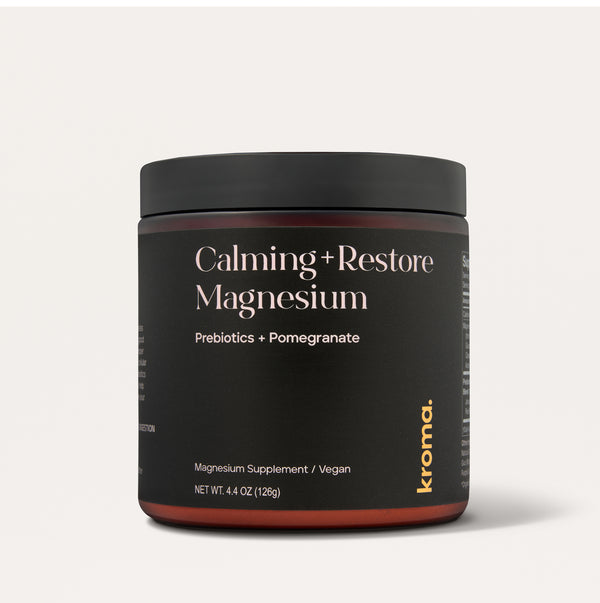
Kroma tip: Calming + Restore Magnesium taken nightly is one of the most impactful single habits for improving sleep naturally. It supports deep sleep, cortisol regulation, and the nervous system's ability to genuinely recover — not just rest.
Incorporate Adaptogens
Adaptogens for sleep work not by sedating the body, but by addressing the cortisol dysregulation that prevents genuine rest. Ashwagandha, reishi, and rhodiola all have meaningful evidence for modulating the stress response and restoring the cortisol-and-sleep rhythm that chronic stress disrupts. These aren't quick fixes — they work best as part of a consistent daily ritual — but over time they meaningfully shift the body out of chronic activation.
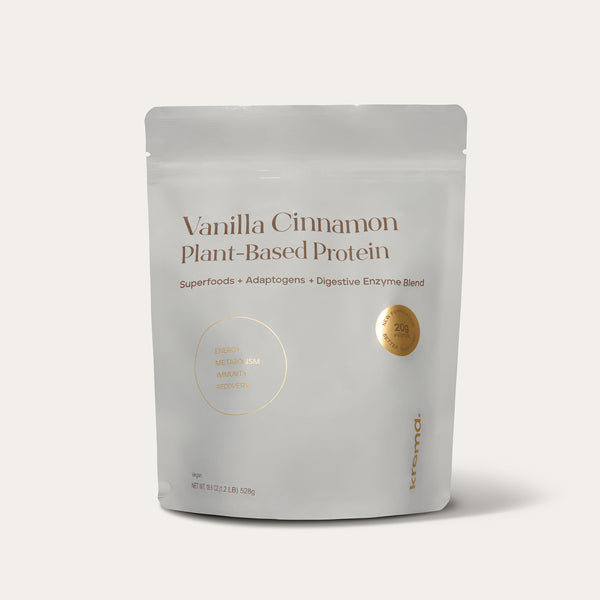
Kroma tip: Kroma products formulated with adaptogenic ingredients offer targeted Kroma sleep support by addressing the cortisol root cause rather than just the surface symptom. The Beauty Matcha Latte and Plant-Based Proteins include functional adaptogens chosen specifically for stress resilience and nervous system support.
Support Your Gut
Sleep and gut health have a bidirectional relationship that is increasingly recognized in research. The gut produces a significant portion of the body's serotonin — the precursor to melatonin — meaning a disrupted microbiome directly affects the brain's ability to produce the hormone that governs sleep onset. Supporting gut health is, in a meaningful way, supporting sleep.
Kroma tip: Super Core — Kroma's dairy-free colostrum — supports gut lining integrity and microbiome health, contributing to better serotonin production, reduced inflammation, and the deeper, more restorative sleep that follows.
Create Consistent Sleep and Wake Times
Your circadian rhythm is a biological clock — and it runs on consistency. Going to bed and waking at the same time every day (including weekends) is one of the most powerful ways to restore normal cortisol-and-sleep rhythms, improve sleep quality, and reduce the time it takes to fall asleep. It's also one of the most underrated natural sleep interventions available.
Reduce Evening Stimulation
Dim lights, limit screens, and reduce cognitive demands in the two hours before bed. The nervous system needs a runway to transition from activation to rest — and the modern evening environment makes that transition harder than it needs to be.
A Note on Testing
If you've addressed the foundational lifestyle factors and sleep still isn't improving, working with a functional medicine practitioner to test cortisol patterns (through a four-point salivary panel), thyroid function, and sex hormone levels can provide invaluable clarity. Sleep problems are frequently symptoms of underlying hormonal imbalances that lifestyle alone can't fully resolve. Testing removes the guesswork and allows for targeted, personalized support.
Your Whole Health Starts Here
Why sleep matters isn't a complicated answer. Without it, hormones can't reset, metabolism can't function efficiently, tissue can't repair, emotions can't regulate, and the immune system can't protect. Every wellness goal — weight, energy, mood, hormonal balance, cognitive performance — is harder to achieve and easier to lose when sleep is compromised.
The body wants to sleep. It is always trying to restore itself. Your job is simply to stop putting up barriers and start giving it the conditions it needs to do what it already knows how to do.
Consistent sleep and wake times. Blood sugar stability. Magnesium. Adaptogenic support. A gut that produces serotonin efficiently. These aren't complicated interventions — but they are the foundation that every other health goal is built on.
Start there. Stay consistent. Everything else gets easier.
Restore your sleep with Kroma and discover daily essentials designed to help you finally rest the way your body needs.
Last Edited: May 21, 2026