

What Are Adaptogens? A Complete Guide to Adaptogenic Herbs
Published at: August 29, 2025
Published at: August 29, 2025

Quick answer: Adaptogens are a class of herbs and mushrooms that help your body resist and recover from stress — emotional, physical, and chemical. Common adaptogenic herbs include ashwagandha, ginseng, rhodiola, maca, reishi, cordyceps, and turmeric. They work by supporting the hypothalamic-pituitary-adrenal (HPA) axis, helping balance cortisol levels, and improving your body's overall stress response.
Adaptogens, or adaptogenic herbs, have been quite the buzz in the health and wellness space, but what does it mean exactly? Should we add more adaptogenic herbs to our diets? And, how do they support our overall health? With so many buzzwords out there, it is hard to know how to incorporate everything.
If you find yourself asking what are adaptogens, you're in luck. We have broken down everything you need to know. We have listed some of our go-to adaptogenic herbs, their benefits, and how you can start adding them to your diet.
What are adaptogens, exactly? Adaptogens are a class of herbs that basically help your body boost its stress resistance. Our bodies experience stressful events multiple times a day, ranging in severity. These stressors can be emotional or physical.
Adaptogens give us the energy to better process and tolerate stressful events. They can also help us calm down and relax after these events.
Ancient medicinal practices have been using adaptogens for thousands of years. It is only within the last 80 years that scientists have begun to study these herbs to better understand their power.
Adaptogens may work to protect against fatigue caused by stress, whether that’s mental, physical, or emotional.
There are over 70 different types of adaptogenic herbs, but the ones below are the most well-studied and widely used. Here's a quick comparison of the most popular adaptogens, what they're best for, and where you'll find them in Kroma's products:
|
Adaptogen |
Best For |
Common Form |
Found In Kroma |
|---|---|---|---|
|
Ashwagandha |
Stress, cortisol, sleep |
Powder, capsule, tea |
Change Your Life Chai |
|
Ginseng |
Energy, stamina, focus |
Root, powder, tea |
— |
|
Turmeric |
Inflammation, antioxidant |
Powder, fresh root, tea |
Perfect Fast, Ultimate Vitality Latte |
|
Maca |
Hormones, libido, mood |
Powder |
Spicy Passion Latte |
|
Rhodiola |
Fatigue, endurance, mental performance |
Capsule, tincture |
— |
|
Reishi |
Immune, calm, sleep |
Powder, capsule, tea |
Ultimate Vitality Latte, Change Your Life Chai |
|
Cordyceps |
Energy, athletic performance |
Powder, capsule |
Change Your Life Chai |
|
Licorice Root |
Digestion, adrenal, respiratory |
Root, tea, capsule |
— |
While not all herbs are readily available at every grocery store, there are some that are found easily in the produce department and others that are generally found in supplements. Here are some of our favorite adaptogenic herbs explained in more detail.

An herb native to Asia and Africa, ashwagandha is a small shrub with small green flowers and red berries. Its roots are tuberous, similar to carrots or ginger.
Ashwagandha has been used for thousands of years in traditional Ayurvedic medicine. Ashwagandha is mostly found as a powder or combined with other herbs in supplements. You can also use its leaves for tea.
Ashwagandha has been used to help lower the levels of the stress hormone, cortisol, secreted by the adrenal gland. Lowering cortisol levels with ashwagandha may help to reduce stress, support mental health, ease feelings of restlessness, and lower high blood pressure and cholesterol levels.
Ashwagandha also has many benefits specific to women, such as supporting sexual health, preventing gray hair, relieving hot flashes, and improving memory. Curious how it stacks up against another popular adaptogen? See our ashwagandha vs. maca comparison.
There are many varieties of the ginseng plant, such as Siberian ginseng, Korean ginseng, and American ginseng. The most common ginseng is ginseng from Asia, but there is also ginseng native to North America. Ginseng has been used for centuries in both Traditional Chinese medicine and Native American medicine and is thought to be one of the most potent adaptogens. The root of the plant is generally used for its medicinal properties.
Ginseng has been used to enhance physical stamina, prevent exhaustion, boost mental performance, promote vitality, and protect against stress and aging. Ginseng is also thought to support healthy blood pressure levels and heart health. It is thought that ginseng’s effects on the hypothalamic-pituitary-adrenal axis are behind its adaptogenic properties.
The licorice root is native to Asia, Africa, and the Middle East. It is thought to be one of the oldest medicinal herbs and has been used since 4000 BC. Licorice root has over 300 active compounds that promote health and vitality.
Licorice root has been classified as an adaptogenic herb because of its ability to reduce the concentration of cortisol in the body, decreasing overall stress. Licorice root is also known to support digestive health, reduce blemishes on the skin, and aid in respiratory health.

Native to tropical South Asia, the turmeric plant belongs to the ginger family. Turmeric is known for the bright, golden yellow color of its roots. Turmeric has been used since 4000 BC for its adaptogenic properties in Indian medicine. It has been used for over a thousand years in both China and East Africa.
Turmeric is known to be a powerful antioxidant. Antioxidants help to reduce free radicals and oxidative stress in the body. Oxidative stress can cause stress at the cellular level in the body, which can affect larger systems and organs if left unaddressed.
By reducing oxidative stress, turmeric may support digestion, immune system function, heart health, brain health, and mental health. For a deeper look at this golden adaptogen, see our full guide to turmeric benefits.

Maca is native to Peru, in the high Andes Mountains. The indigenous people of Peru have used Maca for over 1,500 years. The root of the maca plant, similar to a turnip, is what possesses adaptogenic properties.
While researchers do not have a clear understanding of how maca works in the body, they have found many areas in the body it seems to support. Sexual health, memory, learning, mood, and stress management have all been shown to be supported by maca. Read more in our complete guide to maca powder benefits.
Grown in high, mountainous regions of Europe and Asia, Rhodiola has been used for centuries in Russia, Scandinavia, and other areas in its native regions. Rhodiola is a smaller plant with yellow and green flowers that bloom in the summer. The roots are generally used as adaptogens.
Rhodiola has been shown to protect the body against physical, chemical, and biological stress because of its engagement with the hypothalamic-pituitary-adrenal axis. This protection may help support mental health and heart health. Rhodiola has also been shown to protect against aging, and it supports physical activity and immune function.
Often called the "mushroom of immortality," reishi (Ganoderma lucidum) has been used in Traditional Chinese Medicine for over 2,000 years. Reishi is one of the most well-known adaptogenic mushrooms, valued for its ability to support immune function, calm the nervous system, and promote restful sleep.
Reishi works as an adaptogen by modulating cortisol and supporting the HPA axis, helping the body shift out of "fight or flight" mode. It's often paired with other adaptogens — like turmeric and ashwagandha — for full-spectrum stress and immune support. You'll find reishi in our Ultimate Vitality Latte and Change Your Life Chai Latte.
Cordyceps is an adaptogenic mushroom known for boosting energy, athletic performance, and oxygen utilization. Unlike caffeine, cordyceps works with your body's natural energy systems rather than overriding them — making it a popular choice for athletes and anyone navigating long days. Learn more in our complete guide to cordyceps benefits.
Most adaptogenic herbs are generally considered to be safe and have little to no side effects for most people when taken at the right dose. However, if you are pregnant, nursing, or taking medications, it is best to reach out to your doctor to find out if it is safe to add adaptogenic herbs to your diet or supplement regimen.
If your main reason for exploring adaptogens is stress relief, you're in good company — adaptogens for stress are by far the most researched and most widely used category. The best adaptogens for stress work by regulating cortisol, the body's primary stress hormone, and supporting the HPA axis so your nervous system can shift out of chronic "fight or flight" mode.
The four most effective adaptogens for stress are:
Ashwagandha — the most well-studied adaptogen for cortisol reduction; ideal for daily stress and sleep issues.
Rhodiola — best for stress-related fatigue and mental burnout.
Reishi — calming, restorative; best for evening stress and sleep.
Holy basil (tulsi) — gentle, balancing; good for emotional stress and mood.
For an everyday way to add adaptogens for stress to your routine, our Change Your Life Chai Latte combines ashwagandha, reishi, and turmeric in one cup.
Many adaptogenic herbs have a long history of use specifically for women's health concerns — including hormonal balance, menstrual cycle support, perimenopause symptoms, energy, and libido. The best adaptogens for women tend to be ones that support the endocrine and reproductive systems alongside the stress response.
Maca — supports hormone balance, libido, mood, and energy through perimenopause and menopause.
Ashwagandha — helps with cortisol, sleep, and stress-related cycle disruptions.
Rhodiola — supports mental energy and combats burnout.
Reishi — calms the nervous system and supports sleep, which underpins hormone regulation.
As with any new supplement, women who are pregnant, breastfeeding, or trying to conceive should consult their healthcare provider before adding adaptogens — see the next section for more.
Short answer: Most adaptogens in pregnancy are not recommended without medical guidance. While some adaptogenic herbs have been used safely in traditional medicine for centuries, modern clinical research on pregnancy use is limited, and certain adaptogens — including ashwagandha and rhodiola — are typically advised against during pregnancy.
If you're wondering can you have adaptogens while pregnant, the answer depends heavily on the specific herb, the dose, and the trimester. A few key points:
Generally avoided in pregnancy: ashwagandha, rhodiola, licorice root, and high-dose ginseng.
Often considered safer in moderation: small amounts of culinary turmeric and maca — though even these should be discussed with your provider.
Breastfeeding: similar caution applies; some adaptogens can pass into breast milk.
With so many different adaptogenic herbs, there are many benefits available. Some may benefit the body more at a cellular level, while others may benefit specific areas of the body, like sexual health or heart health. Here are the benefits most adaptogens bring to the table:
The biggest benefit of adaptogenic herbs is their ability to protect the body against stress. This stress can be physical, emotional, or chemical. It can even protect from cellular stress. When your body is protected against stress, your heart health, mental health, and sleep can all benefit.
When our body is under stress the adrenals release more cortisol. Because the body is so focused on sending out the cortisol hormone to distribute glucose for energy (to essentially “run away from the lion”), it is not able to produce other hormones that are needed. Thyroid hormones, insulin, and gonadotropins (follicle-stimulating hormones) are all affected.
Adaptogens work with the body to help improve endurance, though they do not necessarily give you endurance. With the help of adaptogens, your body is better able to handle stress, which regulates hormones, and, in turn, allows your body to produce energy and use it more efficiently.
The stress-reducing properties of adaptogens also support brain health. Mental fatigue and lack of attention can be symptoms of chronic stress in the body. Supporting yourself with adaptogenic herbs may support your brain health, improving your attention.
Adaptogens are found in supplements, adaptogen teas, tinctures, soups, and even prepackaged foods. Some adaptogens you can easily find in the produce department of your local grocery store and can easily add to smoothies.
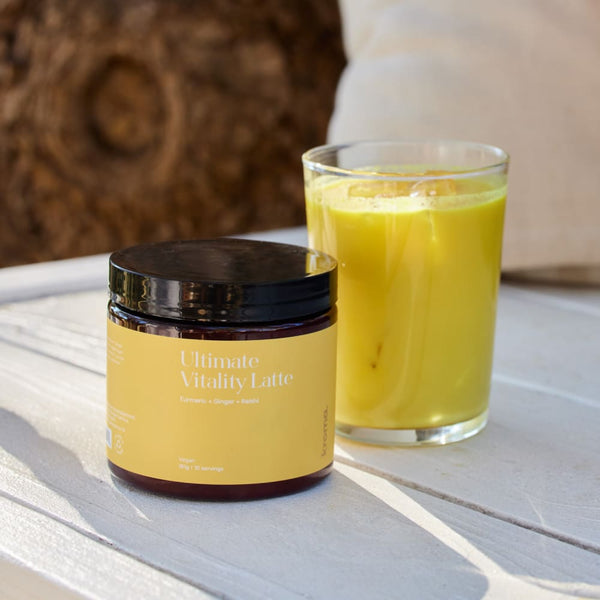
Our favorite way to add adaptogenic herbs to our diet is with our delicious superfood lattes here at Kroma Wellness, including our Beauty Matcha Latte packed with antioxidants and L-theanine, and our Ultimate Vitality Latte with reishi mushrooms and turmeric.
Adaptogens, renowned for their ability to assist the body in adapting to stress and restoring balance, find a perfect partner in matcha's rich profile. This dynamic combination creates a harmonious elixir that not only delights the senses but also nurtures the body's resilience.
Matcha, with its antioxidants and L-theanine content, already offers a soothing and focused energy boost. The integration of adaptogens takes this experience a step further, providing a gentle yet profound support system for the body's response to stressors. Whether it's the adaptogenic qualities of ashwagandha, the rejuvenating effects of Rhodiola, or the calming influence of holy basil, these natural ingredients enhance matcha's inherent ability to contribute to overall vitality. If you're curious how adaptogens compare to nootropics for cognitive support, see our guide on adaptogens and nootropics.
So, what are adaptogens? Adaptogens are a group of herbs that help your body handle emotional, physical, and chemical stress. Adaptogenic herbs help to balance the cortisol levels in your body, which allows other systems to process more efficiently. They can help balance your hormones, improve endurance, and increase your attention, among other things.
If you are looking for a way to help your body through stressful situations, you may want to try to incorporate adaptogenic herbs into your daily routine. They may be just what you've been looking for!
Kroma believes in the philosophy that food is medicine. Adaptogenic herbs fit right along with this principle. We have added adaptogenic herbs in our 5-Day Reset to help you get started with a wellness-centric lifestyle.
Adaptogens are a class of herbs and mushrooms that help your body resist and recover from stress. They work by supporting the HPA axis and regulating cortisol levels, helping your body return to balance after physical, emotional, or chemical stressors. Common examples include ashwagandha, ginseng, rhodiola, maca, reishi, and turmeric.
The most well-researched adaptogenic herbs are ashwagandha (stress, sleep), rhodiola (fatigue, mental performance), ginseng (energy, focus), maca (hormones, mood), reishi (immune, calm), cordyceps (energy, endurance), and turmeric (inflammation, antioxidant). The right adaptogen for you depends on what you're trying to support.
The best adaptogens for stress are ashwagandha, rhodiola, reishi, and holy basil (tulsi). Ashwagandha is the most studied for cortisol reduction; rhodiola helps with stress-related burnout; reishi supports relaxation and sleep; and holy basil offers gentle emotional balance. Many people combine two or more of these in a daily routine.
Most adaptogens in pregnancy are not well-studied and are generally not recommended without medical guidance. Ashwagandha, rhodiola, licorice root, and high-dose ginseng are typically avoided in pregnancy. Small amounts of culinary turmeric and maca may be safer, but always consult your OB or midwife before adding any adaptogen while pregnant or breastfeeding.
Some adaptogens may be safe in small amounts during pregnancy, but most should be paused without explicit approval from your healthcare provider. Pregnancy changes how your body processes herbs, and some adaptogens — like ashwagandha and rhodiola — are commonly contraindicated. Gentler stress-management approaches (prenatal yoga, magnesium, ginger tea) are typically a safer first option.
The best adaptogens for women include maca (hormones, libido, perimenopause), ashwagandha (cortisol, sleep, cycle regulation), rhodiola (energy, burnout), and reishi (sleep, nervous system). These adaptogenic herbs are commonly used to support hormonal balance, menstrual health, and stress resilience across different life stages.
Adaptogenic effects of Panax ginseng on modulation of cardiovascular functions | NCBI
The aphrodisiac and adaptogenic properties of ginseng | PubMed
Bioactive Candy: Effects of Licorice on the Cardiovascular System | NCBI
Liquorice (Glycyrrhiza glabra) and the adrenal-kidney-pituitary axis in rats | PubMed
Turmeric, the Golden Spice - Herbal Medicine | NCBI Bookshelf
Last Edited: May 28, 2026