What Are 'Natural Flavors,' Really? A Straight Answer About What's in Kroma Products
Published at: October 26, 2026
Published at: October 26, 2026

A plain-English look at the two most mysterious words on an ingredient label, and what we can tell you about ours.
Natural flavors are flavoring substances the FDA defines as coming from plant or animal sources, such as spices, fruits, vegetables, herbs, yeast, or dairy, whose main job in a product is flavor rather than nutrition. That's the legal answer, and it comes straight from 21 CFR 101.22(a)(3). Here's the longer, more human one.
Picture a flavor as a tiny recipe. Natural flavors start with an essential oil, extract or distillate from a real source, then get blended with a few supporting ingredients that keep the flavor stable and easy to mix. Depending on the manufacturer and the flavor, those usually include things like dextrose, silicon dioxide, juice concentrates, citric acid, malic acid, ethanol, and glycerin.
The label stays short and sweet: "natural flavors." The recipe behind it can be anything but.
Under FDA rules, "natural flavor" means a flavoring made from a plant or animal source, such as a fruit, spice, herb, root, or bark, through processes like extraction, distilling, or roasting. Its main job is taste, not nutrition. That's the legal definition in 21 CFR 101.22(a)(3).

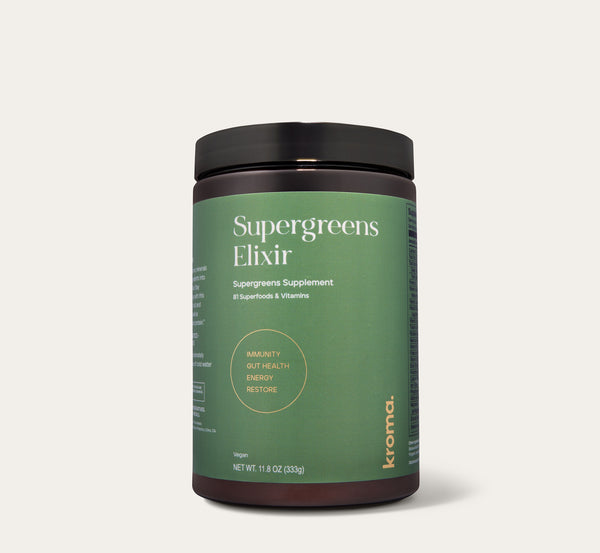
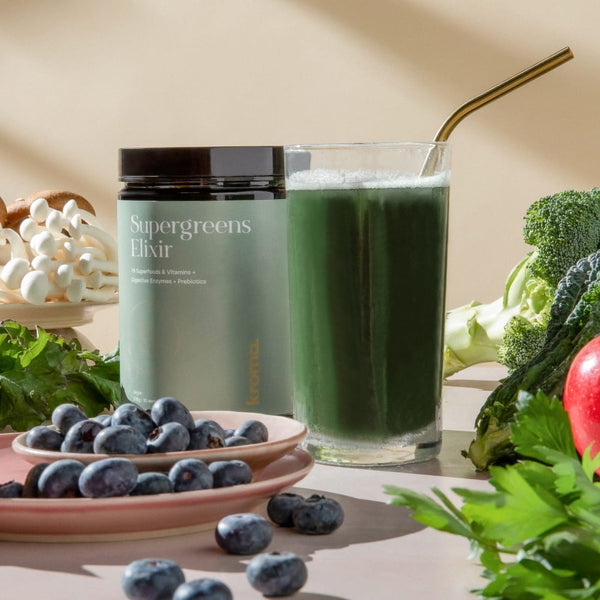
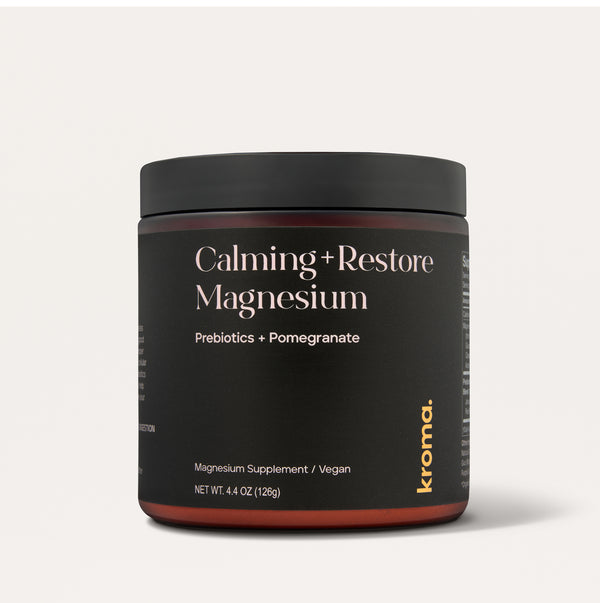
You'll find natural flavors in three of our products: Supergreens Elixir, Calming + Restore Magnesium, and Super Core. Here's why they're there, and what's actually in that little phrase.
Some of the most useful ingredients in a supplement taste... ambitious. Greens can be grassy and bitter. Magnesium can be chalky and a little metallic. We tested a lot of options, and these flavor blends did the best job of rounding out those strong notes so you actually want to drink your daily scoop.
This is the question we hear most, and it's a fair one. There are three reasons, and none of them is "we're hiding something."

The recipe belongs to the flavor maker. Flavor houses treat their formulas as trade secrets, much like a restaurant's house sauce. We buy the finished flavor, so the full recipe isn't ours to publish.
The list would be a mile long. One fruit flavor can contain dozens of components. FDA rules let all of them be declared as "natural flavor" (21 CFR 101.22(h)(1)) instead of a paragraph of chemistry on a small label.
Every component still has to clear a safety review. Flavor ingredients must be approved by FDA or recognized as safe (GRAS). Many are reviewed by the FEMA Expert Panel, an independent scientific panel that has evaluated flavor ingredients since 1959. It uses the same "reasonable certainty of no harm" standard FDA uses.

So what's usually in the blend besides the flavor itself? Across the industry, the most common supporting ingredients are simple ones: dextrose, silicon dioxide, fruit juice concentrates, citric acid, malic acid, ethanol, and glycerin. They carry the flavor, keep the powder flowing, and help it stay fresh.

A label tells you the category. We'd rather also tell you the rules that category has to follow.
Here's what we can confirm for Supergreens Elixir, Calming + Restore Magnesium and Super Core:

Organic whenever available. We choose organic flavors whenever an organic version exists.
Non-GMO.
Third-party tested. Our finished products are tested by independent labs. (More on how we read those results in our Prop 65 guide.)
"Organic" matters here because it adds a second rulebook. Under the USDA National Organic Program, organic products must use organic flavors when they're commercially available. Any non-organic flavor allowed instead must come from natural sources. It also can't be made with synthetic solvents, synthetic carriers or artificial preservatives (NOP Policy Memo 11-1; 7 CFR 205.605(a)).

In other words, we can't share the secret recipe. We can point you to the two sets of federal rules it has to follow.
“Natural flavors” means real-source flavoring substances, defined by the FDA and used to make potent ingredients taste good. The exact recipe belongs to the flavor supplier, but the standards behind it are open. At Kroma, those flavors are organic whenever available, non-GMO, and third-party tested.
U.S. FDA, 21 CFR 101.22: Foods; labeling of spices, flavorings, colorings and chemical preservatives (readable copy: Cornell LII)
USDA National Organic Program, Policy Memo 11-1: Natural Flavors
USDA, 7 CFR 205.605: Nonagricultural substances allowed in organic products
Flavor and Extract Manufacturers Association, About the FEMA GRAS Program
Consumer Federation of America, Citizen Petition on "Natural Flavor" Labeling (Nov. 2023)
This article is for general education and isn't medical advice.
Last Edited: October 26, 2026