

Progesterone and Perimenopause: What Low Progesterone Actually Feels Like
Published at: September 18, 2026
Published at: September 18, 2026

Quick Answer: What does low progesterone feel like in perimenopause? Progesterone is usually the first hormone to shift — often years before hot flashes start. Because it's tied to ovulation, irregular ovulation in your late 30s and 40s means less progesterone that cycle, even while estrogen stays steady. The result: heavier or irregular periods, trouble sleeping, new or worsening anxiety, and PMS that feels suddenly worse. You can't supplement your way to more progesterone, but reducing chronic stress, eating enough, and protecting sleep all support the conditions that make healthy ovulation — and progesterone — more likely.
Most hormone conversations start with estrogen. But the hormone that actually shifts first in perimenopause — often years before anyone notices a hot flash — is progesterone.
If you've read our piece on estrogen dominance, this is the other half of that story. What gets called "estrogen dominance" is really progesterone and perimenopause doing something specific: progesterone falling faster than estrogen, which throws the ratio between them off long before either hormone is technically "low" on a lab test.
Here's what low progesterone symptoms actually feel like, why this hormone drops first, and what genuinely helps.
Progesterone isn't made continuously — it's produced mainly by the corpus luteum, a temporary structure that forms after ovulation. No ovulation, no meaningful progesterone that cycle.
As perimenopause begins, ovulation becomes less consistent years before periods themselves become irregular. Every skipped or weaker ovulation means less progesterone that month. Estrogen, by contrast, keeps being produced by follicles that haven't ovulated yet — so it often stays relatively steady, or even spikes, while progesterone quietly declines underneath it. That mismatch is what actually drives most of the progesterone imbalance symptoms that show up in your late 30s and 40s.

Signs of low progesterone are easy to miss because they overlap with "just being tired" or "just being stressed." A few patterns are worth paying attention to.
Progesterone normally balances estrogen's effect on the uterine lining. Without enough of it, the lining can build up more than usual, leading to heavier, longer, or less predictable periods — often one of the earliest signs.
Progesterone breaks down into a compound called allopregnanolone, one of the body's most potent natural calming agents. It's also directly sleep-promoting. When progesterone drops, sleep is frequently the first thing to suffer — trouble falling asleep, or waking in the early hours and not settling back down.
That same calming compound plays a real role in mood regulation. Many women notice anxiety or irritability that feels different from their usual stress response — less tied to circumstances, more like a baseline shift.
If PMS symptoms — bloating, breast tenderness, mood swings, fatigue — have intensified compared to a few years ago without an obvious cause, a shifting progesterone-to-estrogen ratio is one of the most common explanations.
There's no supplement that reliably raises progesterone the way medication can — that's a conversation for your doctor, especially since hormone levels fluctuate enough hour to hour that testing alone is rarely definitive. But there's real natural progesterone support available through the conditions that make healthy ovulation more likely in the first place.
Progesterone and cortisol share a production pathway, and chronic stress appears to compete for those resources. We covered the mechanics in what does cortisol actually do — the short version is that lowering chronic stress isn't a nice-to-have here, it's directly relevant to hormone balance.
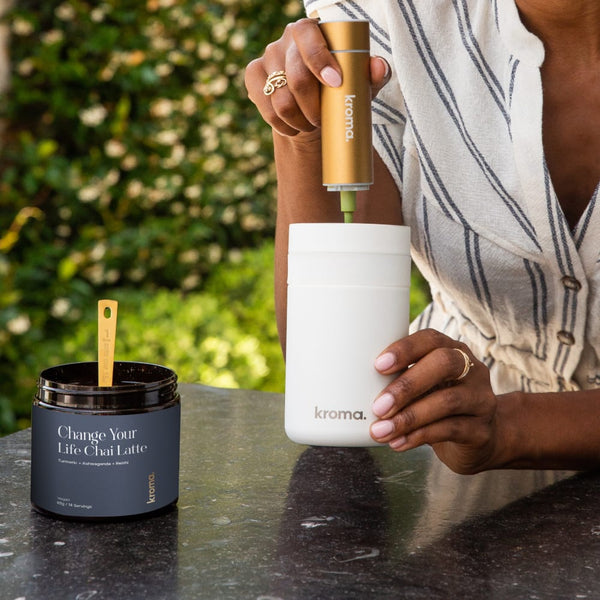
Kroma tip: Change Your Life Chai Latte combines ashwagandha and reishi for daily stress-response support.
Consistent ovulation depends partly on your body sensing enough available energy. Chronic under-eating or over-exercising without adequate fuel can suppress ovulation further, compounding an already-declining progesterone supply.
Both nutrients support the enzymatic pathways involved in progesterone production and are commonly depleted by chronic stress.
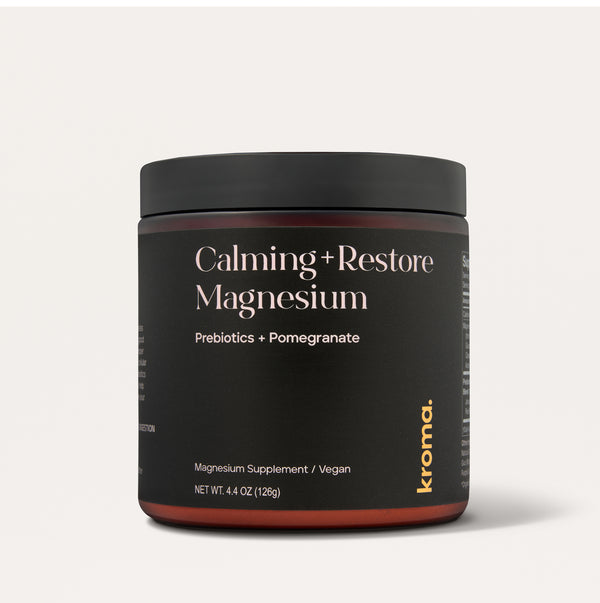
Kroma tip: Calming Restore Magnesium as part of an evening routine covers this gap in a low-effort way.
Sleep and progesterone influence each other in both directions — poor sleep raises cortisol, which further competes with progesterone production. Consistent sleep is one of the few levers that supports the whole hormonal picture at once.
Progesterone is the quiet hormone; it rarely gets the spotlight estrogen does, but it's usually the first to shift, and its decline explains more of the early progesterone and perimenopause experience than most people realize.
You can't force your way to more progesterone, but you can remove the things actively working against it: chronic stress, under-fueling, and poor sleep. That's not a small thing — it's the foundation everything else builds on.
Support your hormones through perimenopause with Kroma. Explore the Kroma Hormone Collection and our Calming Restore Magnesium — built to support the nervous system that hormone balance depends on.
References:
Progesterone: Why 'Normal' Levels Still Leave Women Feeling Off — Lamkin Clinic
Low Progesterone During Menopause: Causes & Treatments — Winona (clinician-reviewed)
Progesterone During Perimenopause: Symptoms & Treatment — Oova
Oral micronized progesterone for perimenopausal night sweats and hot flushes: Phase III RCT — Scientific Reports / Nature
Progesterone Levels Chart for Menopause — Doctronic (medically reviewed)
Last Edited: September 18, 2026