The Wellness Trap: Why Healthy Habits Can Still Leave You Exhausted
Published at: August 26, 2026
Published at: August 26, 2026



Super Porridge / Multi-Serving
Quick Answer: If you're wondering why you're so tired all the time despite following a healthy routine, look beyond the quality of your habits and consider the overall load they're creating. Under-eating, insufficient sleep, excessive exercise, constant tracking, and too little recovery can leave you depleted. Sustainable wellness is less about doing everything perfectly and more about creating a routine your body and mind can actually recover from.
You track your macros. You take your supplements. You exercise regularly. You try to eat well, sleep better, and make healthy choices whenever you can.
On paper, you're doing everything right.
So why are you still asking, “Why am I so tired all the time?”
If you're eating well and exercising but still feel depleted, the answer may not be that you need another wellness routine. Sometimes, the pursuit of perfect health becomes its own source of stress.
Your body may need more nourishment. Your mind may need less tracking. And your routine may need more recovery than optimization.
This is where self-care burnout can begin: when the habits designed to make you feel better start taking more energy than they give back.
If you're wondering why you're tired all the time despite following a healthy routine, start by looking beyond the quality of your habits.
Under-eating, insufficient sleep, excessive exercise, constant self-monitoring, and too little downtime can all contribute to feeling depleted. And if fatigue is persistent or unexplained, it's important not to assume that your lifestyle is the only possible cause. A healthcare professional can help rule out medical or sleep-related causes.
For many people, though, the problem isn't a lack of discipline.
It's too much effort without enough recovery.
A routine can look incredibly healthy while still not providing enough energy.
Skipping breakfast because you're busy, cutting portions to manage calories, avoiding carbohydrates, or going too long between meals can gradually leave you under-fueled. If you're also exercising regularly, your nutritional needs may be even greater.
Protein matters, but so does getting enough overall food.
If you're frequently hungry, unusually tired, irritable, struggling to concentrate, or feeling drained during or after workouts, take a closer look at whether you're actually eating enough throughout the day.
The goal isn't to eat perfectly.
It's to give your body enough nourishment to function, recover, and get through the day.
Healthy habits are supposed to simplify your life. But constant tracking can do the opposite.
Counting every calorie, checking every ingredient, worrying about whether a food is “clean,” monitoring every workout, and feeling guilty when you deviate from your routine can turn wellness into another full-time mental task.
Research on orthorexia and rigid health-focused eating describes how the pursuit of “healthy” behavior can become increasingly restrictive, perfectionistic, and psychologically demanding. A 2026 qualitative research synthesis also highlights the roles of control, perfectionism, identity, and wellness culture in these experiences.
The important distinction is that healthy eating itself isn't the problem.
The problem is when healthy behavior becomes so rigid that it starts interfering with your peace of mind, relationships, flexibility, or everyday life.
There's a strange contradiction in modern wellness culture: the more seriously we take our health, the easier it can become to forget about rest.
An early workout replaces an extra hour of sleep. A strict meal schedule makes spontaneous plans feel stressful. Another productivity habit takes the place of an evening spent doing nothing.
And “recovery” becomes something you earn only after you've completed everything else.
But sleep, downtime, connection, pleasure, and unstructured time are not obstacles to wellness.
They're part of wellness.
If your healthy routine leaves no room for being human, it may be time to make the routine smaller.
Researchers call this pattern orthorexia — an intense fixation on eating and living "correctly" that starts to cost more than it gives. A study of health-focused social media accounts found 49% of followers showed signs of it. This is self-care burnout in its most literal form: the pursuit of wellness becomes the thing depleting you.
Some warning signs include:
None of this means you're doing something wrong. It may simply mean that a coping strategy has become more demanding than it needs to be.
The goal isn't to abandon healthy habits.
It's to make them flexible enough to support your actual life.
The counterintuitive move — the one that works — is to do less, not more. Real burnout recovery isn't a new protocol. It's subtraction.
Close the fuel gap before anything else. A protein-anchored breakfast and a real lunch fix more fatigue than any supplement will. If you're tired and irritable while "doing everything right," check whether you're actually eating enough before looking anywhere else.
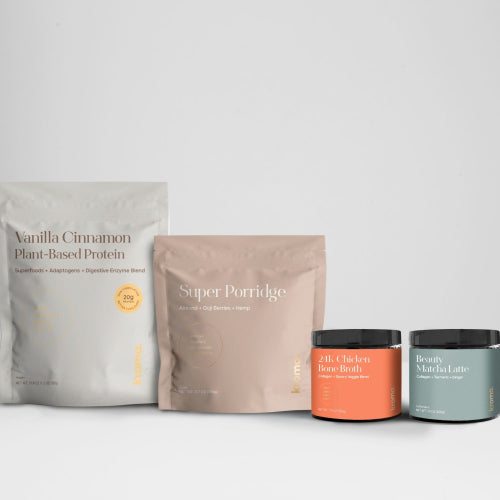
Kroma tip: Super Porridge or a 24K Bone Broth are low-effort ways to close that gap on days you have zero bandwidth to think about food.
Sleep debt compounds faster than almost anything else, and no daytime discipline compensates for it. If sleep is what you sacrifice for an early workout or a late scroll, that's usually the highest-leverage place to start.
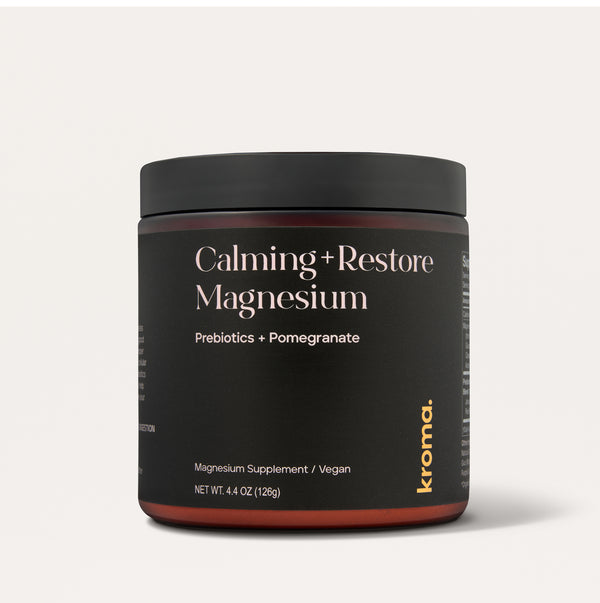
Kroma tip: Calming Restore Magnesium as part of a wind-down routine can help signal that the day is actually over.
Pick the rule costing you the most mental energy and let it go for seven days. Notice what happens. Most people find the anxiety they expected doesn't show up — and the space it frees up is where actual rest lives.
This is the heart of gentle wellness: habits sized to fit your actual life, not an idealized one. Sustainable healthy habits are boring on purpose — the ones you can still do on a bad week, which is why they compound over years instead of burning out in a season.
This is consistency over perfection in practice: seven days that are 80% good outperform three days that are 100% "correct." For more on why all-or-nothing backfires, see our companion piece on why nourishment beats restriction. If you want a structured reset built around this philosophy rather than against it, our 5-Day Reset is designed to nourish, not deplete.
Wellness isn't a rulebook you have to follow perfectly. If why am I so tired all the time is a question you keep asking despite doing everything "right," the answer probably isn't to do more.
Eat enough. Sleep enough. Drop a rule. A wellness practice you can sustain quietly for years will always outlast the one you can only manage for a season.
Build gentle, sustainable wellness with Kroma. Explore the 5-Day Reset and our Daily Rituals collection — built for real life, not a highlight reel.
References:
Tragantzopoulou et al. Eating clean, feeling broken: A qualitative meta-synthesis of orthorexia nervosa — Acta Psychologica 2026
Understanding Orthorexia's Presence in Diet Culture — Katelyman Nutrition (clinician-authored)
Is Clean Eating a Cover for Disordered Eating? — National Alliance for Eating Disorders
Linardon J, Tylka TL, Fuller-Tyszkiewicz M. Intuitive Eating and Its Psychological Correlates — meta-analysis, Int J Eat Disord 2021
Last Edited: August 26, 2026
Super Porridge / Multi-Serving